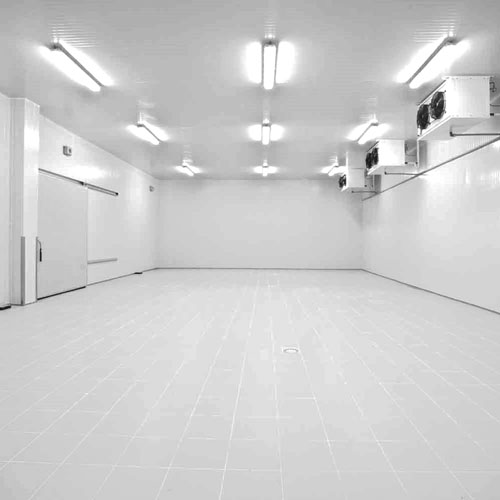
If you run a restaurant, bakery, butchery or small food manufacturer, sooner or later you will ask whether you need a cold room or a freezer room. They look simple from the outside: an insulated box with a door and a unit on the wall. In practice the details of design, sizing and installation make a very big difference to how well it works, how much power it uses and how long it lasts.
This guide explains what a cold room is made of and what to think about before you request quotes.
The main parts
- Insulated panels: the walls and ceiling are made from sandwich panels with a steel or coated skin and a core of polyurethane or similar insulation. Panels lock together with cam-lock fittings.
- The floor: freezer rooms need an insulated and often heated floor to stop the ground freezing. Chiller rooms may use an insulated panel floor or a floor with a sealed finish.
- The door: a hinged or sliding door with a heavy duty gasket, a heated frame in freezers and an internal safety release.
- The refrigeration system: a condensing unit (compressor and condenser, usually mounted outside or in a ventilated space) and an evaporator inside the room.
- Controls: a thermostat or controller, a defrost control and alarms.
- Extras: strip curtains, internal lighting, shelving, a pressure relief port in freezers and a drain line.
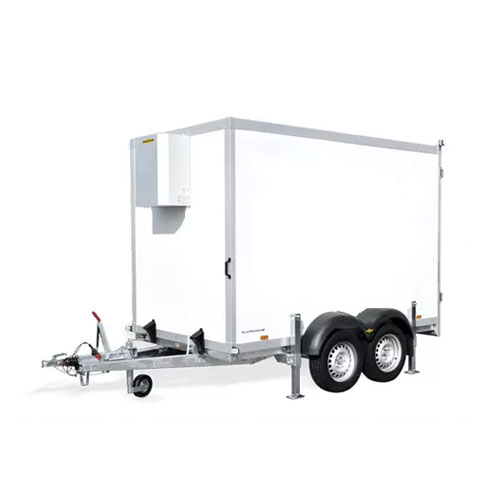
Chiller or freezer?
A chiller holds stock at above freezing temperatures, normally 0 to 5 degrees Celsius, for produce, dairy, drinks and meat for short term storage. A freezer room runs at minus 18 degrees Celsius or lower for frozen food. A freezer needs thicker panels, a more powerful system, an electric or hot gas defrost and a heated floor and door frame. It costs more to build and to run, so do not buy a freezer if a chiller will do.
What decides the size of the system
The refrigeration load is not just about the size of the room. A properly sized system takes into account:
- The room volume and the panel thickness.
- The temperature you want to hold, and the temperature of the surrounding area.
- How much product goes in each day, and at what temperature. Warm product adds a large heat load.
- How often the door is opened, and for how long.
- Lighting, fans, people working inside and other internal heat sources.
- The climate. Durban's warm and humid summers mean condensing units work harder than in a cooler region.
A system that is too small runs non-stop, cannot recover after door openings and wears out early. One that is too big short-cycles, wastes power and does not dehumidify properly. A good supplier will ask you these questions rather than quote by size alone.
Where to put it
Think about access for deliveries, how close it is to the kitchen or preparation area and whether the floor is level and strong enough. The condensing unit needs space and airflow, so avoid enclosed, hot spots next to ovens or flues. The condensate drain needs a route to a drain. A power supply with the correct capacity and protection is essential, especially for a three-phase system.
Choosing a refrigerant and equipment
Modern systems use a range of refrigerants, some of which are flammable. Ask what refrigerant the supplier proposes, what the equipment brand is and how easy it is to get parts and service in your area. Cheap, unbranded units can be difficult to repair.
What to ask for in a quote
- Room size, panel thickness, door size and floor type.
- Make, model and capacity of the condensing unit and evaporator.
- Design temperature and ambient conditions used for the calculation.
- Electrical requirements and what is included in the price.
- Warranty on the panels, the refrigeration system and the workmanship.
- Installation, commissioning and testing, and what training or documentation you receive.
- After-sales service and response times.
The cost of getting it wrong
The cheapest quote can turn out the most expensive. An undersized or badly installed system wastes electricity every day, breaks down during peak season and may fail food safety inspections. Spend time on the design, and choose a contractor who will still be around to service it in five years.
We design and build cold rooms and freezer rooms to suit your space and budget, and we service them once they are in. If you are planning a new room, or struggling with an existing one, give us a call and we will talk it through with you.
Not sure if this applies to your fridge? Ask us.
Call 083 538 5106