

Moving house is stressful enough without arriving to find your fridge will not cool. Fridges are heavy, awkward and surprisingly delicate, and a few small mistakes during a move can cause damage that only shows up days later. The good news is that moving a fridge safely is easy if you follow a few rules.
Before moving day
- Empty the fridge and freezer, and plan to use up or pack the food. Perishables travel in a cooler with ice.
- Switch the fridge off and unplug it 24 hours before the move. This gives it time to defrost.
- Place towels or a tray to catch the meltwater, and empty the drip tray.
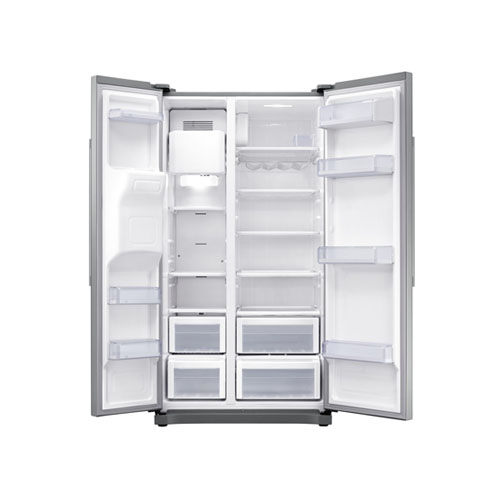
- Remove or tape down loose shelves, drawers and bins so that they do not break.
- Clean the inside while it is empty, and leave the doors open so it dries and does not develop a musty smell.
- If the fridge has a water line or ice maker, turn off the water and disconnect the line carefully.
Moving it safely
- Secure the doors with tape or a strap so they do not swing open. Do not use tape directly on the finish if it can mark it.
- Use a trolley or dolly with straps, and have at least two people.
- Keep the fridge upright whenever possible. This keeps the compressor oil where it belongs.
- Wrap the cabinet with blankets to protect it from scratches and dents.
- Strap it firmly in the vehicle so that it cannot tip or slide.
- Never carry it by the doors or handles.
What if it has to lie down?
Sometimes there is no choice, such as in a small van or a narrow staircase. If a fridge has been tilted or laid down, the compressor oil can run into the cooling system. If it is switched on straight away, it can block the system or damage the compressor. If you have to lay it down, lay it on its side (not on its back or front) and make a note of how long it was laid down.
How long to wait before switching on
This is the question we hear most often. As a rule of thumb:
- If the fridge travelled upright: wait around one to four hours so that the oil and refrigerant settle.
- If it was laid down or tilted heavily: wait 12 to 24 hours before switching on.
- Always check the manual. Some manufacturers give different guidance.
Waiting costs nothing, and it protects the compressor. Use the time to level the fridge and clean the area.
Setting up in the new home
- Place the fridge on a level floor, and adjust the feet so the doors close properly.
- Leave a gap of several centimetres at the back and sides for airflow, and keep it away from ovens and direct sun.
- Plug it directly into a wall socket, not an extension lead, and ideally through a surge protector.
- Reconnect the water line carefully and check for leaks.
- Switch it on, set the temperature and wait several hours before loading it with food.
- Check the temperature with a thermometer after a few hours.
Chest freezers and commercial units
The same rules apply to chest freezers, display coolers and under-counter units. Commercial equipment is heavier and often needs a professional mover or a technician, particularly if it is hard-wired or part of a split system.
When something goes wrong
If the fridge does not cool after you have waited and set it up, hums but stays warm, or makes a new noise, something may have moved in transit. Switch it off and call a technician. We repair household fridges and freezers on-site across Durban and the surrounding suburbs, and we are happy to check a fridge after a move. Call 083 538 5106.
Not sure if this applies to your fridge? Ask us.
Call 083 538 5106