

You have thrown out the old food, wiped the shelves and washed the drawers, and the fridge still smells. It is one of the most irritating household problems, and the reason is simple: the smell is not coming from the places you have cleaned. It is coming from somewhere hidden, or from a fault in the fridge itself. Here is where to look, starting with the most common causes.
1. Forgotten food in a corner
It sounds obvious, but a leaking packet at the back of a shelf, a bag of vegetables that has liquefied in the crisper or a container behind the milk is the cause more often than anything else. Empty the fridge completely, shelf by shelf, and check every container, including sauces and anything in the door.
2. The defrost drain and drip tray
Frost-free fridges melt frost into a drain at the back of the fridge or freezer. Food particles and moisture collect in that drain, and in the drip tray under or behind the fridge, and they grow bacteria and mould. The result is a sour, musty smell that no amount of shelf cleaning will remove. Flush the drain hole with warm water and a little bicarbonate of soda using a syringe, and wash the drip tray.
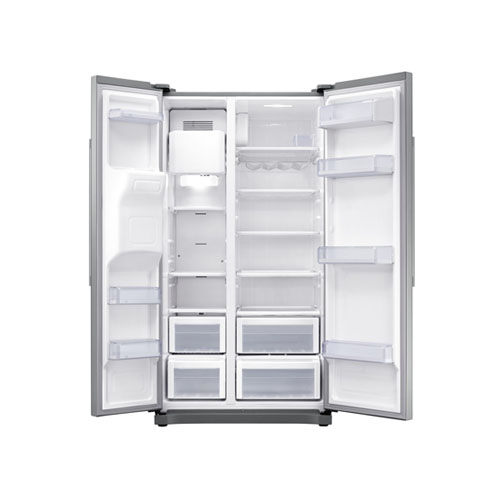
3. Mould on the door seals
The folds of the door gasket are warm, damp and full of food residue, which makes them a perfect place for mould. It leaves a musty smell each time you open the door. Clean the folds with warm soapy water and an old toothbrush, dry them, and check for black spots that do not come off. A seal that stays mouldy or cracked may need replacing, which also fixes cold air leaks.
4. A freezer that thawed and refroze
After a long power cut, food in the freezer can thaw, leak into the bottom of the cabinet and refreeze. The smell then returns every time the freezer warms up. Empty the freezer, throw out food that has thawed, clean the base and walls and let it air out before restocking. This is very common after load shedding.
5. A saturated or missing filter
Some fridges have a charcoal or air filter to absorb odours. Over time it stops working. Check your manual to see if yours has one and when it should be replaced.
6. A blocked vent or poor airflow
When air cannot circulate, moisture condenses on the walls and food spoils sooner. Keep vents clear and avoid overpacking the shelves.
7. Water in the base or behind the panels
If the drain is blocked for a long time, water can seep behind the liner or into the insulation. The smell then comes from deep inside the fridge. This is harder to fix, and may need a technician to open up the unit and clear the water and the drain.
8. Plastic or electrical smells
A new fridge can smell of plastic for a few days, and that is normal. A burning or acrid smell is different. It can come from a motor, relay or wiring that is overheating. Unplug the fridge and call a technician.
How to remove the smell properly
- Switch off and unplug the fridge. Move food into cooler boxes with ice.
- Remove all shelves, drawers and seals where possible, and wash them in warm water with a little dishwashing liquid.
- Wipe the inside with a mix of bicarbonate of soda and warm water, or a mild mix of white vinegar and water. Avoid strong bleach or harsh chemicals on the plastics and seals.
- Clean the drain hole, the drip tray and the door seals.
- Dry everything thoroughly. Leave the doors open for a few hours to air the fridge.
- Place an open box of bicarbonate of soda or a bowl of activated charcoal inside for a few days to absorb leftover odours.
- Restock with sealed containers and wipe spills straight away.
When to call a technician
If the smell comes back within days of a deep clean, the fridge is not drying properly, the drain keeps blocking or you can smell something burning, it is time for a professional look. We check the drain, defrost system and seals, and we will tell you plainly whether the smell is a cleaning problem or a fault. We repair household fridges across Durban and the surrounding suburbs.
Not sure if this applies to your fridge? Ask us.
Call 083 538 5106