

A bit of frost in a freezer is normal. A thick layer of ice on the walls, the shelves or the back panel is not. Ice insulates, blocks airflow and makes the freezer work harder, and in a frost-free fridge it is often the first sign that the defrost system has failed.
Why ice builds up
1. The door or lid seal is leaking
Warm, humid air enters every time the seal fails, and the moisture freezes on the coldest surface. In Durban's humidity this happens quickly. Check the seal with a sheet of paper.
2. The door is opened too often or left ajar
Every opening adds moisture. A drawer or a bag of food holding the door a few millimetres open will ice up the freezer within days.
3. The defrost system has failed (frost-free freezers)
A frost-free freezer melts its evaporator clear of ice on a regular cycle, using a heater, a timer or board and a sensor. When any of these fails, ice builds on the coil and blocks the fan. You will often see a solid block of ice at the back of the freezer, and the fridge section warming up.
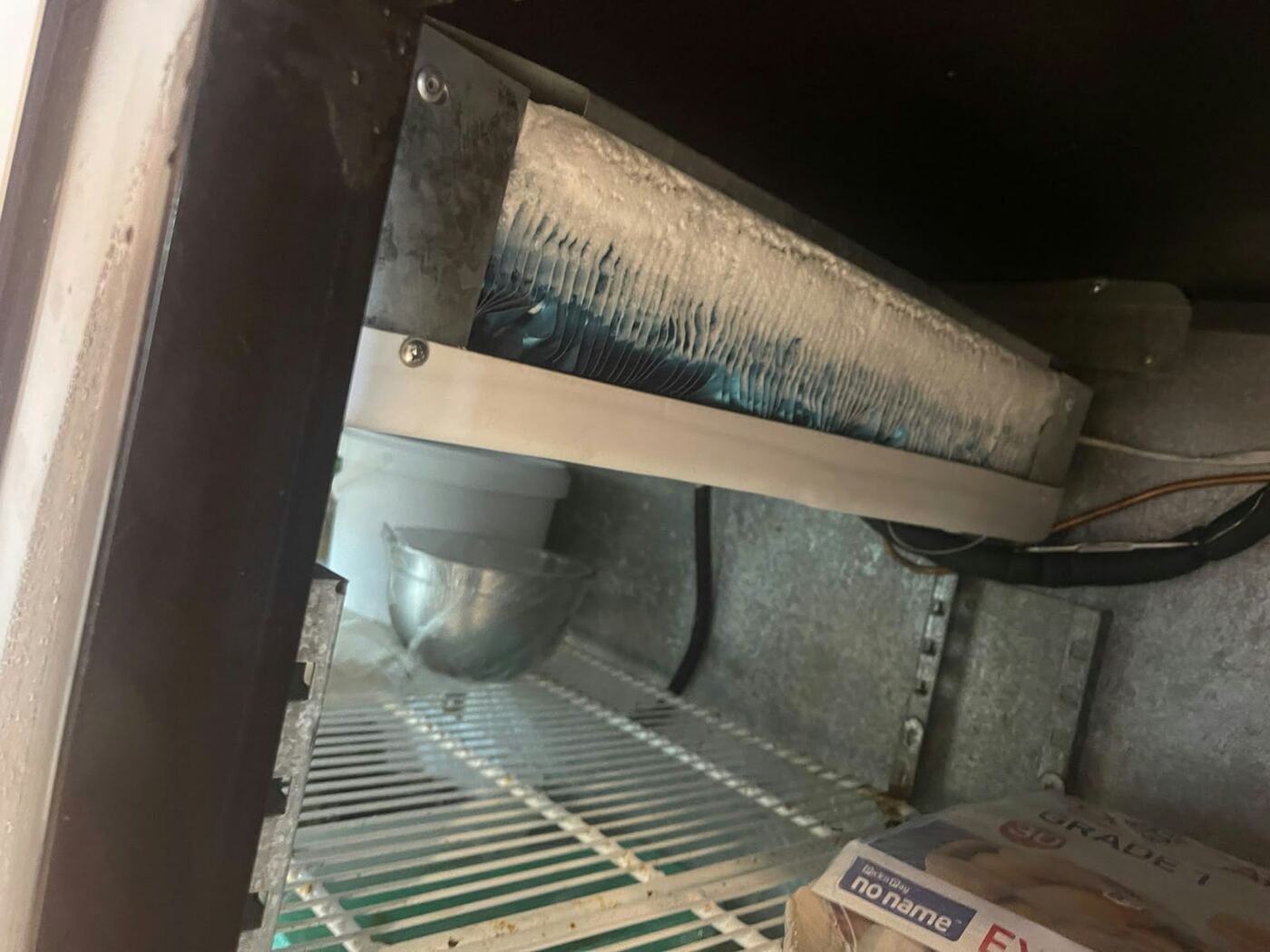
4. The drain is blocked
Melted ice drains away through a small pipe. If it blocks, the water pools and refreezes at the bottom, or leaks into the fridge. This is why some fridges leak water at the same time as icing up.
How to defrost safely
- Switch the freezer off at the wall and empty it into a cooler or another freezer.
- Leave the doors or lid open. Put towels on the floor and a tray under the freezer.
- Let the ice melt naturally. Do not chip at it with a knife, screwdriver or ice pick. The pipes behind the walls are thin and a puncture usually ends the life of the freezer.
- Do not use a hairdryer or a heat gun on a high setting. Heat can damage the plastic and the sensors. A bowl of warm water placed inside can help speed things up.
- Dry the inside completely, clean the seal, and switch the freezer back on.
- Give it several hours to reach temperature before loading the food again.
When the ice keeps coming back
If the ice returns within days or weeks, the cause has not been fixed. On frost-free models it points to the defrost heater, sensor or board. On direct-cool models it points to the seal, the door or the habit of opening it. A technician can test the defrost parts and replace the faulty one.
What it costs
Call-out fees start from R250 and depend on your area. A defrost sensor, heater or fan repair typically falls within our minor repair range of R350 to R950. Major repairs start from R1,250. We diagnose the fault first so you know the cost before work starts.
We repair household and commercial freezers across Durban. Call us if your freezer keeps icing up and we will find out why.
Not sure if this applies to your fridge? Ask us.
Call 083 538 5106